Heritage consultant David Hicks brings us the stories behind some of East Lothian’s historic properties.
In terms of architectural history, Gullane deserves a place on the map for its significant collection of Arts and Crafts homes. The movement was at its height in Scotland when the Edwardian tourism boom brought the wealthy to the village, building their new houses in the latest fashionable style.
The Arts and Crafts movement was a reaction to the mass production and industrialisation of the Victorian age. It looked to celebrate the individual skills of craftsmanship and was inspired by the designs of the medieval past. In terms of architecture, the emphasis was on creating asymmetrical, simply designed homes, using traditional local materials and with handcrafted details.
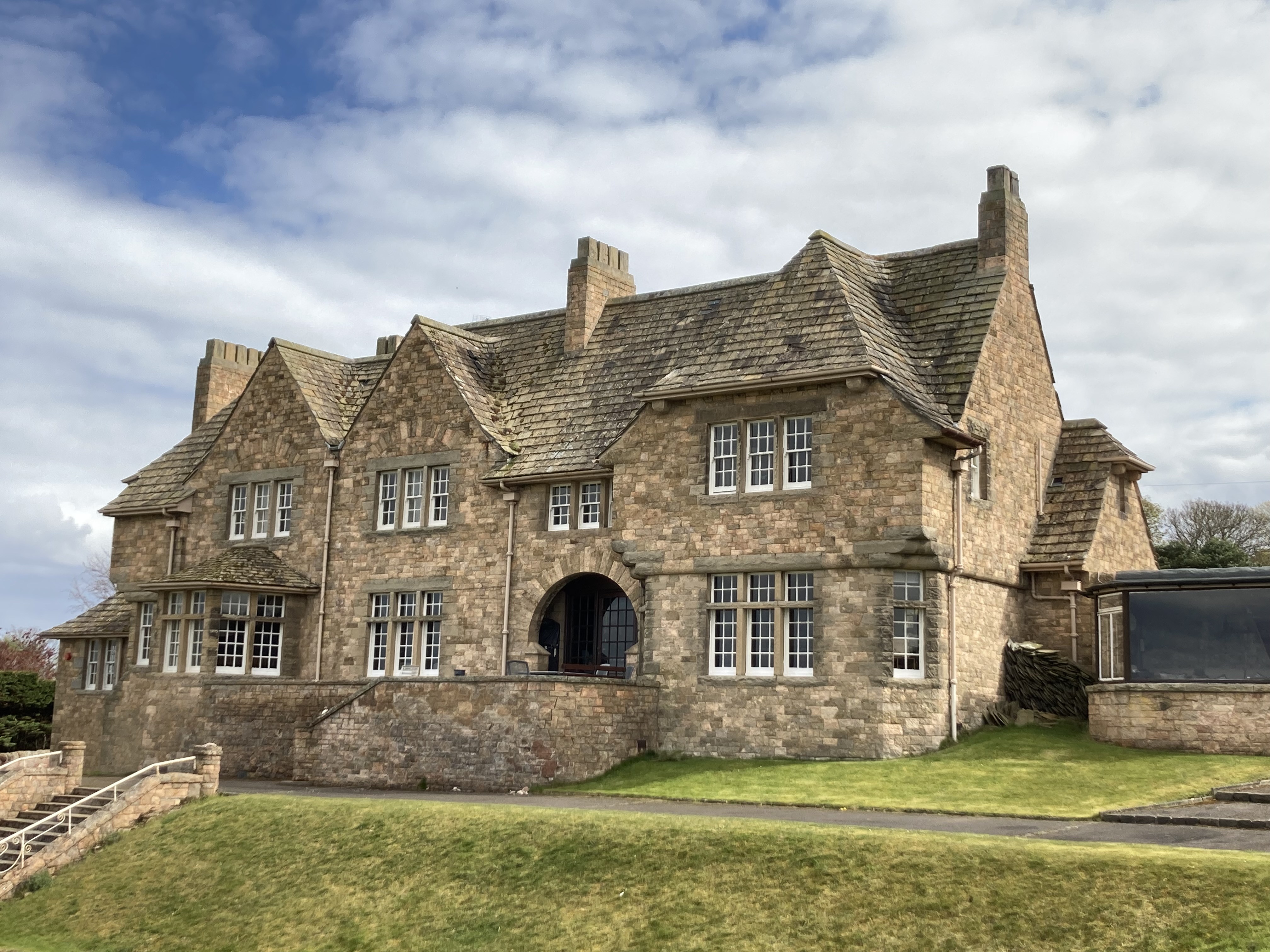
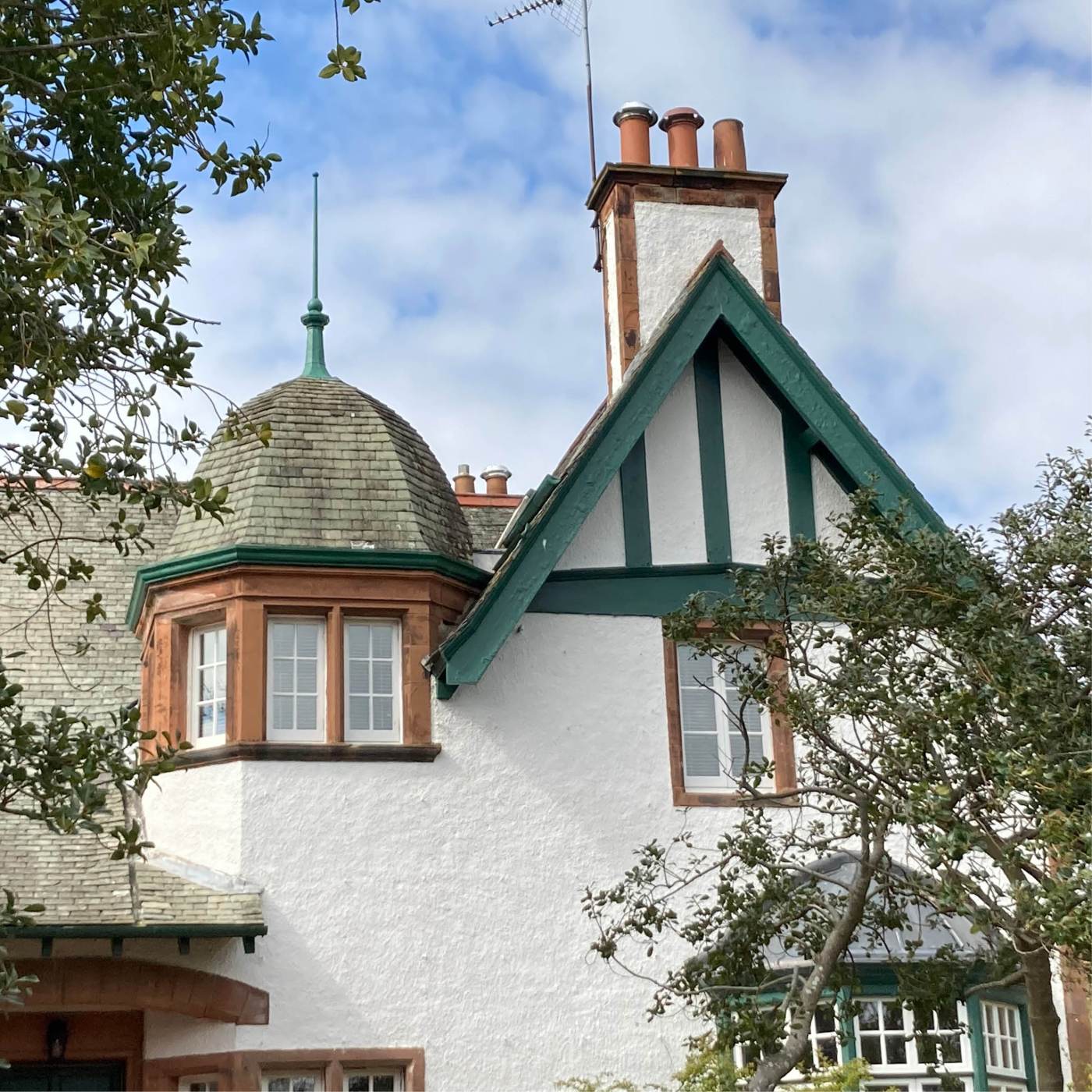
If you take a walk around the hill in Gullane, there are a series of prime examples of the Arts and Crafts style, with features directly inspired by houses of the 1500s or 1600s. Look out for roofs with flared eaves, shaped like a bell, and windows divided by stone mullions. Many houses are covered with a lime-based coating known as harling, leaving exposed stonework around the doors and windows. Some have renaissance-styled decorations above their dormer windows, towers or oriel windows projecting out from the wall.
For many people, the Scottish Arts and Crafts movement is synonymous with Charles Rennie Mackintosh, but many others were also working in this style. Gullane has buildings designed by two of the most influential architects, Sir Robert Lorimer and Arthur Sydney Mitchell. Lorimer designed Whiteholm on Gullane hill, adding a distinctive fish-scale pattern in the roof slates. Sydney Mitchell planned his own house, known as the Pleasance, overlooking Muirfield Golf Course.
Arts and Crafts design was often the preserve of the wealthy, but an exception to this is Whatton Lodge on Hill Road. It was designed in 1910 and inspired by traditional Cotswolds buildings, but built from local Rattlebags stone. It is a good example of the style, an interesting asymmetrical design, with little touches such as corbels projecting from the wall and a sundial over the main entrance. Just after the Second World War, the house was bought by the Miners Welfare Fund, its size and location perfect for a new use as a convalescent home.
Gullane’s Arts and Crafts houses are now mostly over 100 years old and are still much sought-after homes. Their traditional designs and materials have stood the test of time rather well.